External data limitations now dominate digital marketing. Privacy regulations, iOS tracking restrictions, and cookie deprecation have fractured targeting accuracy while driving SMS opt out rates higher. Marketers relying on purchased lists face carrier filtering, low reply rates, and unpredictable cost per acquisition.
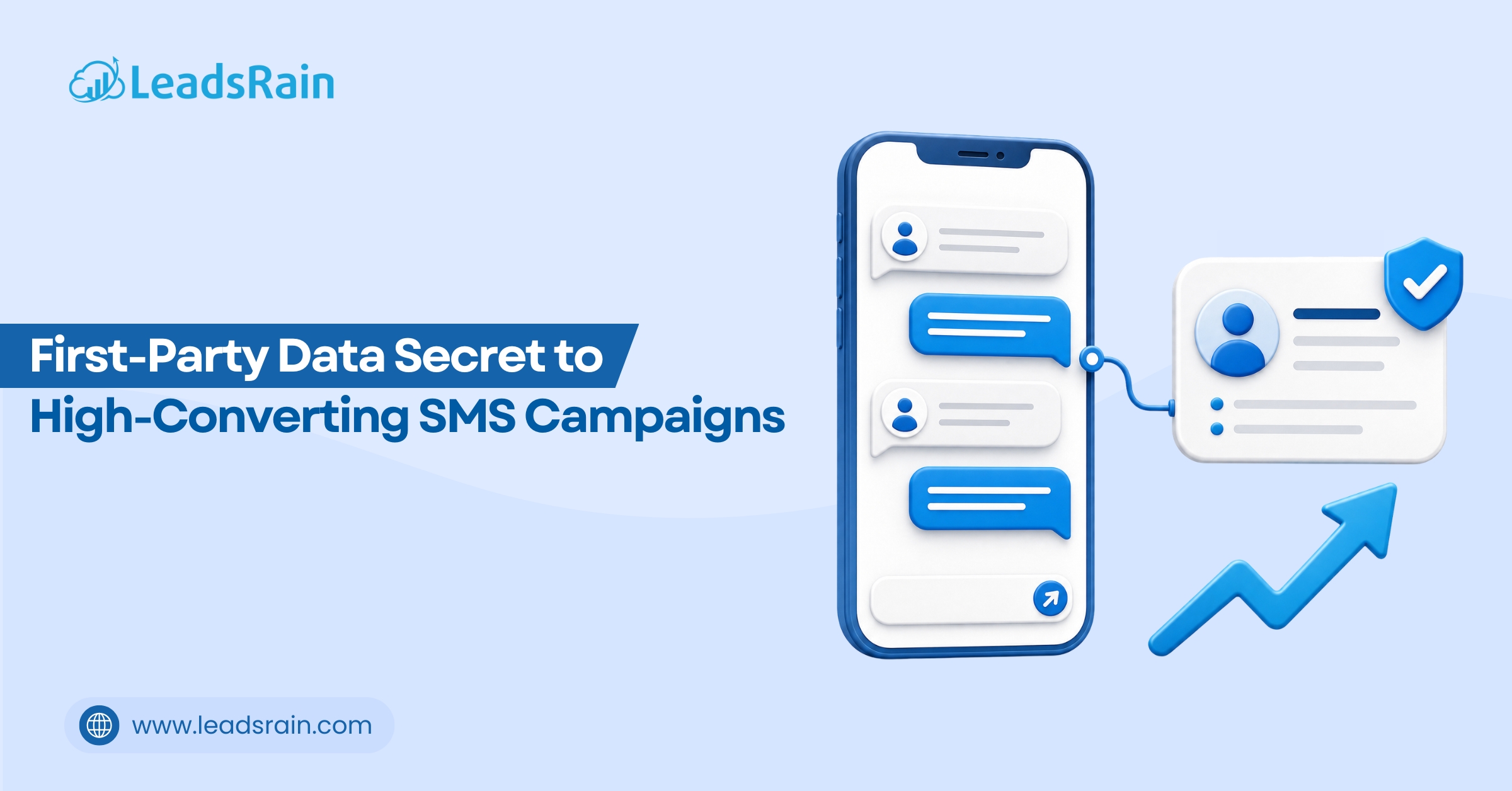
First party data solves these challenges by using customer provided information to enable precise segmentation, personalized messaging, and fully compliant SMS campaigns. When businesses collect consent directly, every text reaches someone who expects communication, resulting in higher engagement and lower compliance risk.
This article explains why first party data outperforms purchased lists for SMS campaigns, outlines collection methods that respect privacy regulations, details segmentation tactics for hyper targeted messaging, and provides implementation steps for turning customer data into booked appointments.
What is First Party Data and Its Importance in SMS Marketing?
First party data is information collected directly from your customers through their interactions with your business. In SMS marketing this includes opt-in keywords, zip code, replies, service history, consent, timestamps and preferred communication windows. This data comes from verified sources like your website forms SMS platforms or CRM systems ensuring accuracy and explicit permission for every contact.
This data matters because it enables precise targeting, maintains TCPA compliance and drives higher reply rates. Messages personalized with verified customer details feel relevant, not spammy, reducing opt outs and carrier filtering. When every text reaches someone who expects your communication engagement increases and cost per booked appointment drops. First party data turns SMS from a broadcast channel into a precision tool that converts.
Why Does First Party Data Outperform Purchased Lists for SMS Campaigns?
First party data originates from direct customer interactions so it carries deterministic accuracy that third party lists cannot replicate. When a customer submits a zip code, selects a service category or replies to a keyword opt in, the information reflects verified intent, active contact details and explicit consent status. Purchased lists rely on probabilistic matching inferred demographics and stale phone numbers that frequently trigger carrier hard bounces. Deterministic data ensures your SMS platform routes messages to valid mobile endpoints while maintaining clean delivery metrics that protect your sender ID from carrier throttling.
Verified Customer Data Improves SMS Deliverability
TCPA and CTIA guidelines require documented written consent before any promotional text reaches a mobile device. First party collection builds audit ready permission trails with timestamped opt ins source attribution and explicit opt out routing. Purchased lists lack this compliance infrastructure forcing businesses to send unsolicited messages that spike spam complaint rates above carrier thresholds.
First-Party Data Keeps Your SMS Campaigns Compliant
When complaint volume exceeds 0.1 percent carriers automatically downgrade deliverability, apply message filtering or suspend your registered campaign. First party data prevents these routing penalties by aligning every outbound text with verified consumer permission.
Accurate Attribution Helps Measure Real SMS ROI
Closed loop attribution depends on clean data handoffs between your SMS platform and CRM. First party records carry unique identifiers UTM parameters and source tags that preserve the complete customer journey from initial opt in to booked appointment. Third party lists break this chain during manual import or delayed sync creating attribution gaps that inflate cost per lead and obscure true ROI. When your SMS platform pushes deterministic first party data into your CRM you can track reply velocity conversion rate and revenue per subscriber without relying on fragmented tracking cookies or cross platform matching algorithms.
Behavioral Segmentation Increases SMS Conversions
High converting SMS campaigns require dynamic segmentation that adjusts to behavioral signals in real time. First party data enables rule based workflows that trigger messages based on service history engagement patterns and explicit frequency preferences. Purchased lists force broad broadcast outreach that ignores customer lifecycle stage creating message fatigue and rapid opt out accumulation. When your platform segments by verified transaction data and past reply behavior you can route high intent contacts to live agent handoffs while nurturing research phase leads through automated booking sequences. This precision reduces wasted spend and scales conversion velocity without increasing message volume.
What First Party Data Points Drive the Highest SMS Engagement for Local Businesses?
Effective SMS personalization requires more than a first name. Businesses that layer behavioral, geographic, and transactional data into their messaging sequences see dramatic improvements in reply velocity and booking rates.
Zip code and service area data enables geographic targeting that filters out non serviceable leads before they consume dispatcher time or marketing budget. Validated location data ensures every message reaches a household within your operational radius.
Service history and purchase frequency allows trigger based messaging that aligns with actual customer maintenance cycles instead of arbitrary promotional calendars. Past interaction records tell you exactly when a follow up becomes relevant.
Preferred communication windows from past engagement data optimizes send timing to match when customers actually reply to texts and book appointments. Historical reply patterns replace guesswork with proven delivery windows.
Vehicle or property details from intake forms enables hyper personalized content that increases relevance and reduces perceived spam that triggers opt outs. Specific references to recent purchases or upgrades demonstrate active account management.
Consent timestamp and source tracking preserves compliance records for TCPA audits while enabling channel specific segmentation and renewal automation. Documented permission dates protect your sender ID during carrier reviews.
Reply behavior patterns help identify high intent segments that convert faster and deserve priority routing to live agents or direct booking links. Customers who consistently engage with structured options move through the funnel with minimal friction.
Opt down preferences like frequency choices reduce hard opt outs by giving customers control over message volume while keeping them in your database. Preference selection maintains engagement without overwhelming subscribers.
CRM stage tags allow dynamic message sequencing that moves leads from awareness to booking without manual intervention or channel switching.
Automated stage progression ensures the right message reaches the right prospect at the exact conversion moment.
How Do You Collect First Party Data Without Friction or Compliance Risk?
Gathering accurate customer information requires intentional design that balances conversion speed with regulatory compliance. The following framework ensures your SMS campaigns capture high quality data while maintaining explicit consent standards.
Step 1: Embed explicit opt in language on website forms landing pages and ad CTAs
Store clear consent wording directly in your CRM with timestamped records. Use phrasing that specifies message frequency and provides immediate opt out instructions.
Step 2: Use keyword triggered SMS opt ins that capture service intent and location data
Design a two step flow that requests a zip code immediately after keyword submission. Real time validation filters out unqualified contacts before they enter your database.
Step 3: Add preference centers that let subscribers select message frequency and service categories
Build self service portals that align outreach volume with customer expectations. Preference selection reduces fatigue and maintains long term database health.
Step 4: Integrate DMS or CRM systems to auto capture customer data during service interactions
Eliminate manual entry by syncing intake forms, service records, and payment systems. Automated data flow prevents transcription errors that delay follow up campaigns.
Step 5: Deploy post service surveys that request feedback while collecting updated contact preferences
Capture consent renewals and communication preferences at peak satisfaction moments. Survey responses refresh your database while reinforcing brand trust.
Step 6: Monitor consent expiration dates and automate renewal requests
Track permission timelines across all segments and trigger renewal prompts before compliance windows close. Automated renewals maintain continuous outreach capability without manual tracking.
Summing it up
First party data forms the foundation for compliant high converting SMS campaigns that scale without triggering carrier filters or subscriber fatigue. Businesses that collect customer information directly maintain accurate attribution, precise targeting, and sustainable reply rates across all outreach channels.
Turn customer provided details into personalized messages that justify every text interruption and drive measurable bookings. Looking forward to building SMS campaigns powered by your own customer data? – Drop us a line at support@leadsrain.com for a setup focused on first party integration and compliant campaign architecture.