Local businesses face constant competition for customer attention. Phone rings go unanswered. Email inboxes overflow. Direct mail gets ignored. In this crowded landscape, finding a direct path to potential buyers determines whether your calendar stays full or stays empty.
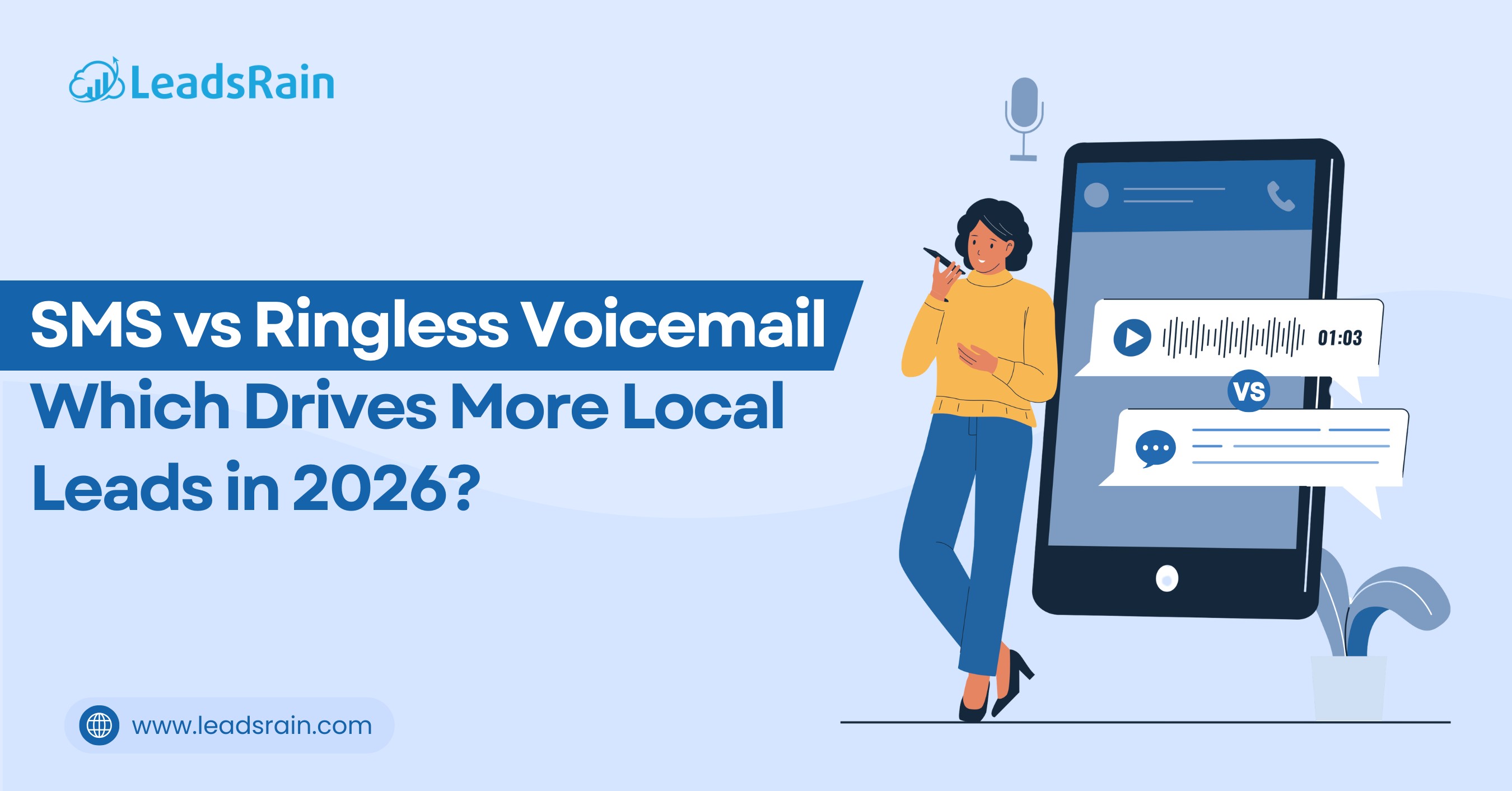
Ringless voicemail and SMS marketing offer two distinct ways to reach mobile users instantly. Ringless voicemail drops an audio message directly into a voicemail inbox without triggering a phone ring. SMS marketing delivers text messages that appear on the home screen and require explicit permission before sending. Both methods bypass inbox clutter, yet they serve different purposes and generate different response patterns.
This article explains how each channel works, compares engagement rates and costs, reviews compliance requirements, shares real business examples, and shows when to use SMS, ringless voicemail, or both together to maximize local customer engagement and lead generation.
How Do Ringless Voicemail and SMS Marketing Reach Local Customers?
Both channels deliver messages directly to mobile devices, but they work in different ways and serve different business goals. Understanding their mechanics helps you choose the right tool for each customer interaction.
Ringless voicemail places a pre recorded audio file into a mobile voicemail box without triggering a phone ring. The message appears as a new voicemail with your business caller ID. Recipients listen at their convenience, making this ideal for routine reminders, seasonal promotions, and broad awareness campaigns. Delivery happens silently, so there is no interruption to the user’s day. Response rates typically range from five to twelve percent. Costs stay low, usually one to three cents per delivered message.
SMS marketing sends short text messages that appear instantly on a mobile lock screen. Federal rules require written consent before sending promotional texts. Once permission is secured, messages achieve ninety eight percent open rates within three minutes. Customers respond when texts include clear next steps like “Reply YES to book” or “Tap to call now.” Local service businesses use SMS for appointment confirmations, same day availability alerts, quote requests, and urgent service notifications. Response rates average forty to forty five percent. Costs run two to five cents per message, but the direct booking potential delivers stronger return on investment.
Choose ringless voicemail when you need
- Silent delivery for large audience outreach
- Low cost per message for frequent brand touchpoints
- Simple audio updates that do not require immediate reply
- Seasonal reminders or event announcements
Choose SMS marketing when you need
- Instant visibility for time sensitive offers
- Two way conversations that confirm appointments
- High response rates from ready to buy customers
- Direct booking links or click to call actions
Use both together for maximum impact
Start with a ringless voicemail to introduce a new service or seasonal offer. Follow up three days later with an SMS containing a direct booking link. This sequence respects customer attention while creating multiple qualified touchpoints. Track response rates at each stage to identify which combination delivers the lowest cost per booked appointment.
Ringless Voicemail vs SMS Marketing: Which Channel Delivers Better ROI for Local Businesses?
Local business owners need clear data to decide where to invest their communication budget. This comparison breaks down ringless voicemail and SMS marketing across the metrics that matter most for lead generation, customer engagement, and appointment booking.
| Comparison Factor | Ringless Voicemail | SMS Marketing |
| Delivery Method | Silent audio drop to voicemail inbox | Direct text to mobile lock screen |
| Permission Required | Varies by state, best practice is consent | Explicit written consent required by law |
| Open Rate | Twenty five to thirty five percent | Ninety eight percent within three minutes |
| Response Rate | Five to twelve percent | Forty to forty five percent |
| Average Cost Per Message | One to three cents | Two to five cents |
| Best For | Broad awareness, routine reminders, seasonal promotions | Urgent requests, booking confirmations, two way conversations |
| Conversion Speed | Slow to moderate, depends on callback timing | Immediate, especially with click to call or booking links |
| Compliance Complexity | Moderate, follow state calling laws | Strict, requires opt in records and STOP handling |
| Message Length | Up to sixty seconds of audio | One hundred sixty characters per text |
| Tracking Capability | Limited to callback volume | Full attribution with UTM parameters and call tracking |
| Customer Preference | Passive listening at convenience | Active engagement with instant reply options |
| Ideal Audience Size | Large lists for brand visibility | Segmented lists of consented, high intent contacts |
How Local Businesses Using Ringless Voicemail and SMS and Getting Results?
A plumbing company serving three metro areas switched from cold calling to ringless voicemail for seasonal water heater maintenance reminders. The campaign reached eight thousand homeowners with a recorded message about winter safety checks. Two hundred twelve calls returned to the office within forty eight hours, generating forty two scheduled service visits. The silent delivery avoided interrupting work hours while keeping the brand visible.
An HVAC contractor integrated SMS marketing for emergency dispatch coordination. When temperatures exceeded ninety five degrees, the team sent texts to past customers offering same day diagnostic visits with zero upfront fees. Customers replied with their zip code and preferred time. Sixty seven percent of recipients booked appointments within two hours. The two way text flow eliminated voicemail delays and connected ready buyers directly to available technicians.
Compliance Rules Every Local Business Must Follow For Ringless Voicemail and SMS Marketing
Federal and state regulations govern both channels to protect consumer privacy. Ignoring these rules triggers fines, carrier blocks, and damaged brand reputation.
- Always collect explicit written consent before sending promotional SMS messages
- Include your business name and physical address in every opt in form
- Provide immediate opt out instructions using the keyword STOP in every text
- Honor opt out requests instantly without requiring confirmation steps
- Never send ringless voicemail or SMS messages between eight PM and eight AM local time
- Register your campaign with The Campaign Registry using accurate use case descriptions
- Maintain clear records of consent, delivery logs, and opt out confirmations
- Review state specific privacy laws before launching campaigns in new markets.
Summing it up
Ringless voicemail and SMS marketing each serve distinct roles in local customer engagement. Voicemail works for broad awareness at low cost, while SMS drives immediate bookings through two way conversations that respect neighborhood level intent.
Local businesses that match the channel to customer urgency see faster calendar fills and lower acquisition costs. SMS captures ready to buy neighbors when they need help today, turning messages into dispatched jobs without wasted rings.
Ready to deploy communication campaigns that book appointments instead of just delivering messages? Contact support@leadsrain.com for hyperlocal SMS setup that measures success by neighborhood level bookings.
Frequently Asked Questions
Can ringless voicemail trigger carrier spam flags for local area codes?
Yes. High volume drops to the same local prefix can trigger spam labeling, reducing future deliverability for your business number.
Does SMS two way reply improve local dispatch routing?
Yes. Customer texts with address or zip let your system assign the nearest technician instantly, reducing drive time and increasing same day capacity.
How does zip code validation in SMS reduce cost per qualified lead?
Requiring zip reply before calling filters out non serviceable areas. Every connected conversation comes from someone you can actually serve.
Can weather triggered SMS outperform seasonal voicemail for home services?
Yes. Auto alerts during rain or heat spikes in your county capture urgent demand. Two way replies book jobs before competitors react.
Does neighborhood personalization in texts increase reply rates?
Yes. Referencing nearby streets or subdivisions builds instant local recognition. Hyperlocal messages feel personal, not broadcast.
How do state consent laws differ for voicemail versus SMS?
SMS requires explicit written consent nationwide. Ringless voicemail rules vary by state. Track consent by jurisdiction to avoid penalties.