
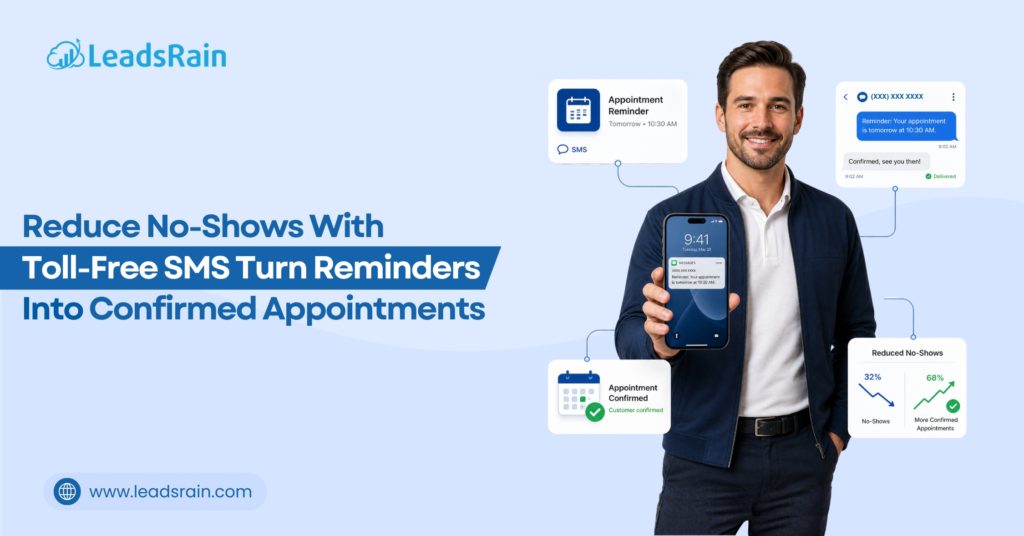
Missed appointments drain revenue across healthcare clinics, home service dispatchers, and automotive repair shops. A single no show idles technicians, reduces billable hours, and forces administrative teams to chase rescheduled slots that rarely fill.
Toll free SMS solves this retention gap with trusted sender identity, bidirectional confirmation flows, and automated reminders that cut no show rates by up to sixty percent. This channel turns passive appointment slots into verified attendance through precise timing and frictionless customer interaction.
This article explains why traditional reminders fail to protect scheduled revenue, outlines the toll free SMS strategy that drives confirmed attendance.
Why Do Traditional Appointment Reminders Fail to Reduce No Shows?
Email reminders get buried in promotional folders, voicemail lacks reply capability, and local number SMS triggers spam filters or gets ignored as unknown senders. These communication gaps allow no shows to persist across all service verticals despite high marketing spend.
Toll free SMS solves these issues with consistent carrier deliverability, trusted sender identity, and automated confirmation tracking that local numbers and email cannot match. This channel turns passive reminders into verified attendance while maintaining full TCPA compliance and audit ready consent records.
What Toll Free SMS Strategy Drives The Highest Appointment Confirmation Rates?
Effective no show prevention requires more than automated alerts. Toll free SMS sequences must align with carrier routing rules, customer psychology, and scheduling platform architecture to turn passive reminders into verified commitments.
Leverage Toll Free Sender Identity For Consistent Carrier Deliverability
Local numbers frequently trigger spam filters when sending high volume alerts, causing reminders to land in filtered folders or fail delivery entirely. Toll free numbers registered through The Campaign Registry receive enterprise routing priority and higher trust scores from mobile carriers. This ensures appointment reminders bypass spam algorithms and arrive directly on customer lock screens with predictable open rates across all networks.
Deploy Bidirectional Confirmation Workflows With Structured Reply Keywords
One way broadcasts measure delivery but never capture intent. Two way text sequences replace open ended questions with predefined keywords like YES, NO, or RESCHEDULE. This eliminates typing friction, accelerates response time, and feeds clean structured data back into your scheduling platform. Automated parsing of these keywords updates appointment status in real time without manual staff intervention.
Implement Interval Based Reminder Sequencing Aligned With Customer Planning Cycles
Sending reminders at arbitrary intervals triggers message fatigue and increases opt out rates. Strategic sequencing at seventy two hours, twenty four hours, and two hours before appointments matches natural customer scheduling habits. The initial message allows time for calendar adjustments, the mid window reinforces commitment, and the final alert captures last minute changes while urgency peaks.
Inject Dynamic Personalization Fields From Booking Data Into Every Message
Generic alerts feel like mass broadcasts and reduce customer urgency to respond. Pulling live data from your CRM or scheduling platform allows automatic insertion of service type, provider name, facility address, and arrival instructions. Dynamic personalization transforms automated texts into customized service updates that increase perceived value and drive higher confirmation velocity.
Sync Confirmation Replies Directly To Scheduling Platforms Via API Webhooks
Manual data entry between text platforms and appointment calendars creates delays, duplicate bookings, and status mismatches. API webhook connections route customer replies instantly into your scheduling software, auto marking slots as verified, canceled, or rescheduled. This real time synchronization eliminates administrative overhead and ensures dispatch calendars reflect accurate attendance predictions.
Track Confirmation Velocity And Attendance Rate Instead Of Message Delivery Volume
Delivery metrics only prove inbox placement and do not indicate customer commitment. Measuring confirmation rate, reply velocity, and actual attendance percentage reveals the true impact of your SMS strategy. Segmenting these metrics by service type, provider, and time of day identifies high risk appointment windows that require additional follow up or adjusted reminder timing.
Activate Automated Waitlist Routing To Recover Revenue From Canceled Slots
Cancellations and no shows create immediate scheduling gaps that idle technicians and reduce daily revenue capacity. Integrating a priority waitlist algorithm allows the system to instantly text consented contacts with matching service needs when an appointment opens. This turns sudden availability into recovered bookings without manual outreach or delayed fill rates.
How Do You Implement Toll Free SMS Reminders That Work Across Multiple Industries?
Deploying a reliable reminder system requires platform configuration, scheduling integration, and continuous metric monitoring. Follow these steps to structure your outreach from initial booking to confirmed attendance without violating federal regulations or carrier guidelines.
Step 1: Register your toll free number with The Campaign Registry and configure use case descriptions for appointment reminders to ensure carrier approval and deliverability
Accurate campaign registration prevents throttling and guarantees your messages route through approved enterprise pathways.
Step 2: Segment contacts by industry, appointment type, and no show history to send relevant reminders that match customer expectations and reduce fatigue
Targeted grouping allows you to adjust frequency and tone based on historical attendance patterns and service complexity.
Step 3: Build automated reminder sequences with dynamic fields for appointment details, provider info, and reply options that personalize every message at scale
Template mapping ensures consistency while pulling live booking data for each individual contact.
Step 4: Integrate toll free SMS with your scheduling or CRM platform to sync confirmation replies, update appointment status, and trigger waitlist offers automatically
API connections eliminate manual tracking and ensure your dispatch calendar reflects real time customer responses.
Step 5: Monitor confirmation rates, opt out percentages, and delivery metrics weekly to catch deliverability issues or message fatigue before they impact attendance
Regular reporting identifies underperforming segments and allows rapid adjustment of timing, copy, or audience targeting.
Step 6: Train front desk or dispatch teams on SMS confirmation workflows so they can follow up on unconfirmed appointments without switching channels or losing momentum
Unified communication protocols ensure staff handle text based confirmations as efficiently as phone calls, preserving response speed and booking accuracy.
Quick Tips to Maximize Appointment Attendance via Toll Free SMS
- Always display your toll free number in confirmation emails and website footers to build sender recognition
- Keep reminder messages under 160 characters to prevent carrier message splitting during high volume windows
- Use location specific references like clinic names or service addresses to increase reply relevance and reduce perceived spam
- Exclude customers who confirmed within 2 hours from additional reminder sequences to avoid compliance conflicts and perceived overmessaging
- Test send times during late morning hours when customers review their daily schedules and can reply immediately
- Route unconfirmed appointments to live callback queues while keeping simple confirmations text based to maintain speed and compliance
- Audit carrier feedback reports weekly to catch spam complaint trends before deliverability drops impact your entire sender ID
Summing it up
Toll free SMS transforms appointment reminders from ignored notifications into verified attendance without manual follow up labor. Multi industry businesses that match message timing, sender trust, and confirmation routing see predictable scheduling fills and lower customer acquisition costs.
Treat SMS as a precision retention tool tied to scheduling data, customer preferences, and real time confirmation tracking. Every message should justify its interruption with clear value and a single action prompt. Ready to deploy toll free SMS campaigns that protect scheduled revenue and eliminate no shows? Contact support@leadsrain.com for compliant setup focused on high converting appointment reminders.